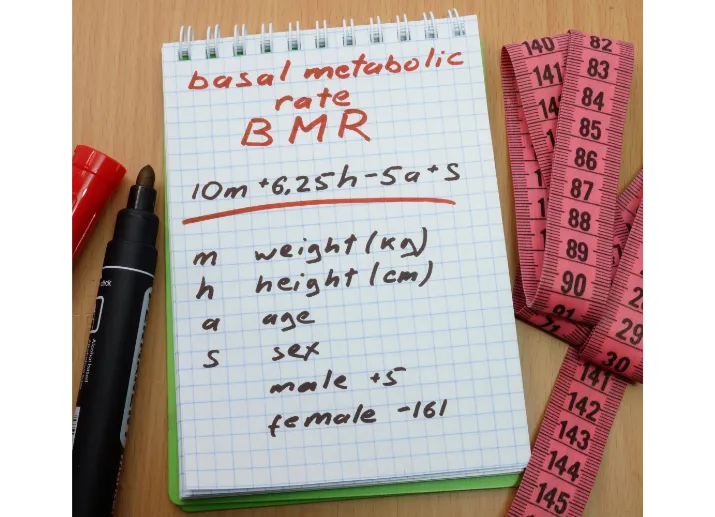
What is Basal Metabolic Rate (BMR)?
Basal Metabolic Rate (BMR) is the amount of energy your body needs to perform basic life-sustaining functions while at rest. These functions include breathing, circulating blood, regulating body temperature, cell growth, brain and nerve function, and muscle contraction. Essentially, BMR represents the number of calories you would burn if you were to rest in bed all day.
Why BMR Matters
Understanding your BMR is crucial because it accounts for the largest portion of your total daily energy expenditure (TDEE). TDEE is the total number of calories you burn each day, including all physical activities. By knowing your BMR, you can better tailor your diet and exercise routine to meet your specific health and fitness goals.
How to Calculate BMR
The Formula
Several formulas exist to calculate BMR, with the Harris-Benedict Equation being one of the most widely used:
- For men: BMR = 88.362 + (13.397 x weight in kg) + (4.799 x height in cm) - (5.677 x age in years)
- For women: BMR = 447.593 + (9.247 x weight in kg) + (3.098 x height in cm) - (4.330 x age in years)
For insights into how BMR is calculated, check this Harvard Health article.
Step-by-Step Calculation
- Measure Your Weight and Height: Ensure you have your weight in kilograms and height in centimeters.
- Use the Formula: Plug your measurements into the appropriate formula based on your gender.
- Get Your Result: The result will be an estimate of the number of calories your body needs to function at rest.
For a more convenient calculation, try our online BMR calculator. For a detailed approach, see the CDC's guide.
Factors Influencing BMR
Age
BMR generally declines with increasing age due to muscle mass reduction. The Harris-Benedict formula may not be precise for those under 19 or over 78. See the FAQ on kids and teens and the elderly.
Gender
Men usually have a higher BMR than women due to differences in body composition; men typically have more muscle mass, which increases BMR.
Body Composition
Individuals with more muscle mass have a higher BMR. Muscle tissue is metabolically active and burns more calories than fat tissue, even at rest. For more details, see Mayo Clinic's article.
Genetic Factors
Your genetic makeup can influence your BMR. Some people naturally have a higher or lower metabolic rate due to their genes.
Hormonal Factors
Hormones play a significant role in regulating metabolism. Conditions like hypothyroidism can decrease BMR, while hyperthyroidism can increase BMR.
Environmental Factors
Temperature and climate can affect your BMR. For instance, your body may expend more energy in cold environments to maintain body temperature.
How to Use Your BMR
Weight Management
Understanding your BMR can help you manage your weight more effectively:
- Weight Loss: To lose weight, create a calorie deficit by consuming fewer calories than your body needs to maintain its current weight.
- Weight Gain: To gain weight, particularly muscle mass, consume more calories than your BMR indicates.
- Maintenance: To maintain your current weight, aim to consume the number of calories equal to your BMR plus the calories burned through physical activity.
Customizing Your Diet
Use your BMR as a starting point to tailor your diet to meet your energy needs. Combine your BMR with your physical activity level to find your TDEE, then adjust your caloric intake accordingly.
Planning Your Exercise Routine
Knowing how many calories you burn at rest can help you design an effective workout plan.
Tips for Boosting Your BMR
While your BMR is largely determined by factors beyond your control, there are some strategies to boost your metabolism:
Build Muscle
Strength training exercises can increase muscle mass and raise your BMR.
Stay Active
Incorporate more physical activity into your daily life, like taking the stairs or going for a walk during lunch breaks.
Eat Protein-Rich Foods
Digesting protein requires more energy than carbs or fats. Include more protein to slightly boost your metabolism.
Drink Enough Water
Staying hydrated is essential for metabolism. Water is required for many metabolic processes.
Get Enough Sleep
Lack of sleep can negatively affect your metabolism. Aim for 7-9 hours per night.
Manage Stress
Chronic stress can affect your metabolism by impacting hormone levels.
Myths and Misconceptions About BMR
Myth: Starvation Mode Drastically Lowers BMR
While severe calorie restriction can reduce BMR, the effect is often overstated.
Myth: Eating Small, Frequent Meals Boosts BMR
Meal frequency has little impact on metabolism compared to total food intake.
Myth: Certain Foods Significantly Boost BMR
Foods like spicy peppers or green tea may slightly boost BMR, but the effects are usually small and temporary.
Frequently Asked Questions About BMR
How Accurate is BMR Calculation?
BMR calculations provide estimates but aren’t 100% accurate. For the most precise assessment, consider a professional metabolic test.
Can BMR Change Over Time?
Yes, due to factors like age, muscle mass, and health status. For more, refer to Harvard Health on metabolism and weight loss.
Is BMR the Same as RMR?
BMR and RMR are similar but measured under different conditions.
Is BMR Calculation Appropriate for Kids and Teens?
The Harris-Benedict formula may not accurately reflect BMR for those under 19. Healthcare professionals use pediatric-specific methods instead. For practical applications, see our online BMI Calculator or the CDC's BMI calculator.
Is BMR Calculation Appropriate for the Elderly?
Standard formulas may not be ideal for individuals over 78. For more, see the National Institute on Aging and their article on healthy eating and nutrition.
Takeaway
Understanding your BMR is a fundamental step in managing your health and fitness goals. Combine this knowledge with a healthy lifestyle, balanced diet, and regular exercise to achieve your goals. Ready to take the next step? Use our online BMR calculator to find out your Basal Metabolic Rate.