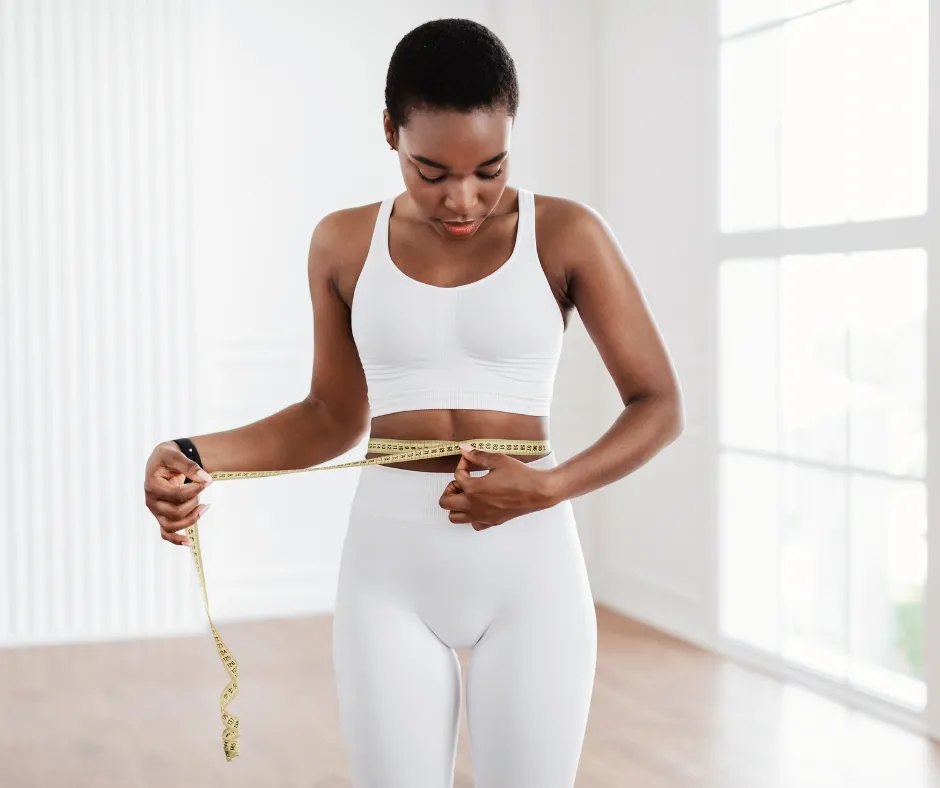
What is Waist-to-Hip Ratio (WHR)?
The waist-to-hip ratio (WHR) is a measure used to assess the distribution of fat in the body, particularly around the waist and hip areas. It is calculated by dividing the circumference of the waist by the circumference of the hips.
Many authoritative health institutions and organizations, including the World Health Organization (WHO), the National Institutes of Health (NIH), and the Centers for Disease Control and Prevention (CDC), include waist-to-hip ratio as part of their guidelines for assessing obesity and related health risks.
WHR is commonly used as a measure to assess health risks associated with abdominal obesity and also has applications in body shape analysis and fitness programming.
Calculating Waist-to-Hip Ratio
To measure your waist-to-hip ratio:
- Measure Your Waist: Use a tape measure to measure the circumference of your waist at its narrowest point, typically just above the belly button.
- Measure Your Hips: Measure the circumference of your hips at their widest point, usually around the buttocks.
- Calculate the Ratio: Divide your waist measurement by your hip measurement to obtain your waist-to-hip ratio. You can use our online Waist-to-Hip Ratio Calculator to determine your waist-to-hip ratio and its classification.
For example, if your waist measurement is 30 inches and your hip measurement is 40 inches, your waist-to-hip ratio would be 30/40 = 0.75.
Waist-to-Hip Ratio Chart
WHR ranges are classified based on their association with health risks:
- Low Risk:
- Women: WHR below 0.85
- Men: WHR below 0.90
- Moderate Risk:
- Women: WHR between 0.85 and 0.89
- Men: WHR between 0.90 and 0.99
- High Risk:
- Women: WHR 0.90 and above
- Men: WHR 1.00 and above
These classifications are based on epidemiological studies that have identified associations between WHR and various health outcomes, such as cardiovascular disease, type 2 diabetes, and certain cancers.
WHR for Women and Men
Assessing waist-to-hip ratio (WHR) may differ slightly between women and men due to differences in body composition, fat distribution patterns, and health risks associated with abdominal obesity.
Key considerations:
- Fat Distribution: Women typically store more fat around the hips and thighs, resulting in a lower WHR, while men tend to accumulate more fat around the abdomen.
- Health Risks: Research suggests that women may be at higher risk for cardiovascular disease and diabetes at a lower WHR compared to men.
- Menopausal Changes: Menopause can shift fat distribution to the abdomen in women.
- Pregnancy and Childbirth: Temporary changes can affect WHR during and after pregnancy.
Waist-to-Hip Ratio in Different Age Ranges
While there isn’t a strict age limit for using WHR, it’s primarily used in adults.
- Adolescents: WHR may be less appropriate due to rapid growth and development, puberty, and body image concerns. Alternatives include CDC BMI Calculator and growth charts.
- Seniors: Changes in body composition (less muscle, more fat), bone density, chronic health conditions, and medication effects must be considered when assessing WHR in seniors.
Factors Affecting the Accuracy of WHR
Several factors can affect WHR accuracy:
- Measurement Technique: Consistent, standardized measurement.
- Clothing: Bulky clothing can skew results.
- Posture: Stand straight with a relaxed abdomen.
- Body Composition: Muscle and bone mass can impact measurements.
- Fat Distribution: Varies by individual.
- Age and Gender: Different patterns of fat distribution.
- Ethnicity: Body shape differences across populations.
- Hydration Status: Can influence waist and hip size.
- Pregnancy and Certain Medical Conditions: Can alter body shape.
- Athletes: High muscle mass may skew WHR.
Is Waist-to-Hip Ratio a Suitable Metric for Athletes?
For athletes, WHR may be less relevant because of lower body fat and higher muscle mass. Metrics like body fat percentage and lean body mass are often more useful. Nevertheless, WHR can still provide some insights, especially in sports where abdominal fat may affect performance.
Waist-to-Hip Ratio Critics and Limitations
WHR is a useful tool but has limitations:
- Sole Focus on Fat Distribution: Doesn’t consider diet, activity, or genetics.
- Population Variability: Thresholds may not apply to all populations.
- Limited Predictive Value: Best used alongside other measures.
- Not Suitable for All Populations: Pregnancy, extreme body types, certain medical conditions.
- Doesn’t Differentiate Between Types of Fat: Subcutaneous vs. visceral fat.
- Potential for Body Image Concerns: Can affect self-perception.
Body Shapes and the Waist-to-Hip Ratio
WHR relates to body shape categories:
- Pear Shape: Narrower shoulders, wider hips, lower WHR.
- Inverted Triangle Shape: Broader shoulders, higher WHR.
- Hourglass Shape: Balanced hips and shoulders, low WHR.
- Apple Shape: Larger waist circumference, higher WHR.
Is it possible to have naturally larger waists compared to hips?
Yes, genetic and hormonal factors can result in naturally larger waists compared to hips. WHR should be interpreted alongside other health measures to avoid misinterpretation.
Other Applications of Waist-To-Hip Ratio
WHR has uses beyond health risk assessment:
- Body Shape Analysis: Fashion, fitness, and beauty industries.
- Research and Epidemiology: Studies linking body shape to health risks.
- Fitness Programming: Tracking body composition changes.
- Health Risk Assessment: Combined with BMI, blood tests, and lifestyle.
- Nutritional Counseling: Motivational tool for behavior change.
- Public Health Interventions: Screening at-risk populations.
How to Dive Deeper into Your WHR Result
- Consult with a Healthcare Professional: Get personalized advice.
- Explore Body Composition Analysis: Consider DEXA, BIA, or hydrostatic weighing.
- Consider Other Health Measures: BMI, waist circumference, body fat percentage, blood pressure, and lipid profiles.
What are other measures an individual could take in addition to the WHR?
- Body Composition Metrics:
- BMI: Online BMI Calculator
- Body Fat Percentage: Online Body Fat Calculator
- Blood Tests: Blood pressure, lipid profile, and blood glucose levels.
- Professional Assessments: Physical fitness assessments, nutrition counseling, and mental well-being checks.
Takeaway
Regardless of your body composition assessment, consider lifestyle habits like exercise, sleep, and stress management. Set realistic health goals and seek professional guidance to support your journey.