How Muscles Grow: The Science of Hypertrophy
Before we dive into yoga's muscle-building potential, let's understand how muscles grow. Hypertrophy occurs when muscle fibers experience microscopic damage during exercise, then repair and grow larger during recovery. Schoenfeld (2010) describes three primary mechanisms that drive this process:
Mechanical Tension
This is the force generated when muscles contract against resistance. Whether it's lifting a heavy weight or holding a challenging yoga pose, mechanical tension creates the initial stimulus for growth. The key is intensity—the muscle must work hard enough to create sufficient tension.
Metabolic Stress
Remember that burning sensation during a tough workout? That's metabolic stress—the buildup of metabolites like lactate and hydrogen ions in the muscle tissue. This cellular environment triggers hormonal responses and cellular swelling that promote growth.
Muscle Damage
Micro-tears in muscle fibers occur during eccentric (lengthening) contractions. Your body repairs these tears, making the muscle stronger and larger than before. This is why soreness often follows a challenging workout.
How Yoga Stimulates Muscle Growth
Now, let's examine how yoga activates these three hypertrophy mechanisms.
Isometric Contractions: Yoga's Secret Weapon
Yoga primarily uses isometric contractions—where muscles generate tension without changing length. Think of holding Plank Pose (Phalakasana) or Chair Pose (Utkatasana). Your muscles are working hard, but they're not moving through a range of motion.
Research shows that isometric training can indeed build muscle, especially when held for sufficient duration (typically 30-90 seconds) at high intensity. A 2019 systematic review found that medium- to long-term isometric training can produce meaningful hypertrophy, with larger gains often reported when contractions are performed at longer muscle lengths.
Progressive Overload in Yoga
Progressive overload—gradually increasing the demands on your muscles—is essential for continued growth. In yoga, you achieve this by:
- Holding poses longer
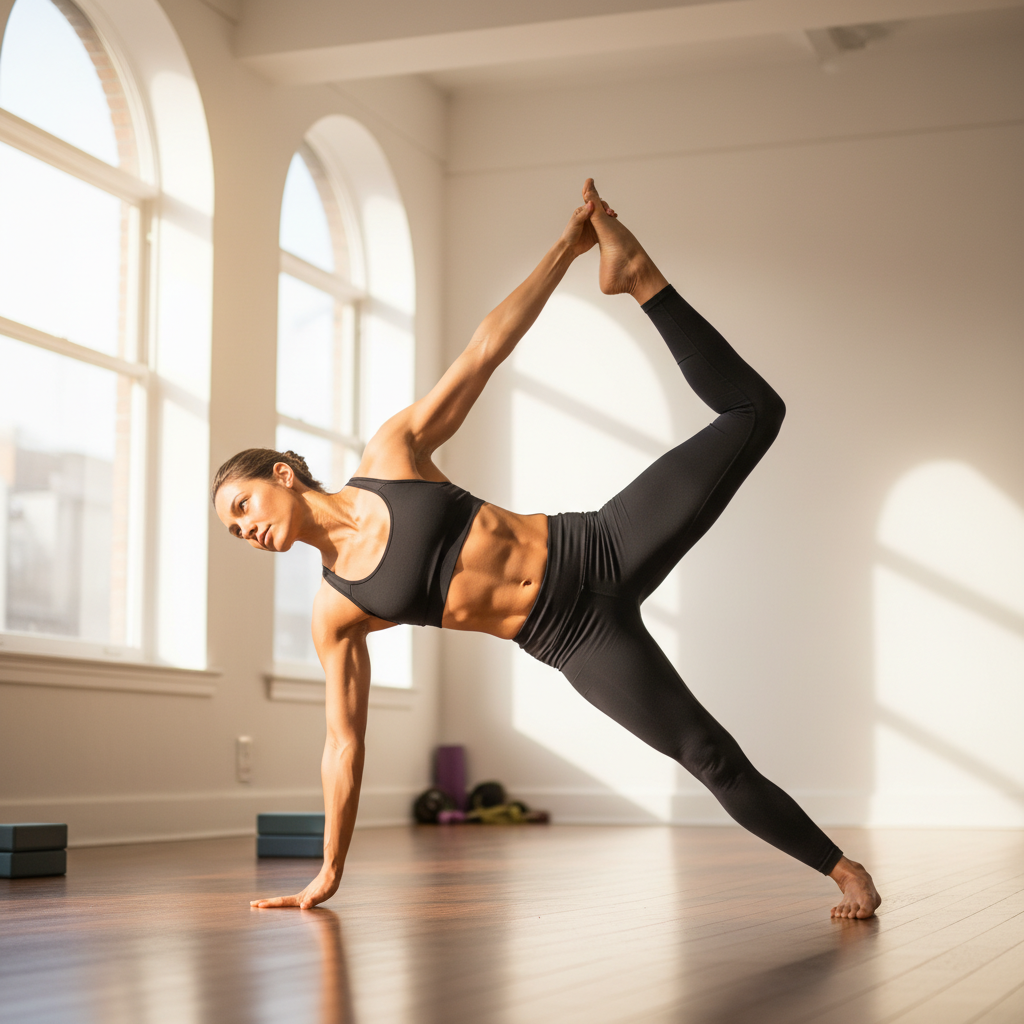
- Moving to more challenging variations (e.g., from High Plank to Side Plank)
- Reducing rest between poses
- Adding resistance (like yoga straps or weights)
- Increasing frequency or duration of practice
Eccentric Loading in Yoga Transitions
While yoga emphasizes isometric holds, the transitions between poses often involve eccentric contractions. Lowering from Plank to Chaturanga Dandasana, for example, creates controlled lengthening under tension—perfect for stimulating muscle damage and growth.
Metabolic Stress Through Flow Sequences
Vinyasa and Power Yoga create metabolic stress through continuous movement. Moving from pose to pose with minimal rest keeps muscles under tension, increases heart rate, and builds up metabolites—all factors that contribute to hypertrophy.
Which Yoga Styles Build the Most Muscle?
Not all yoga is created equal when it comes to muscle building. Here's how different styles stack up:
Power Yoga
Power Yoga is essentially yoga's answer to strength training. With its fast-paced sequences, emphasis on strength poses, and minimal rest, it creates significant mechanical tension and metabolic stress. Expect plenty of Planks, Chaturangas, and Arm Balances that target major muscle groups.
Ashtanga Yoga
Ashtanga follows a set sequence of poses, progressively increasing in difficulty. The Primary Series alone includes numerous strength-building poses like Navasana (Boat Pose) and Utplutih (Lift-Up Pose). The consistent practice of challenging postures makes Ashtanga excellent for building lean muscle.
Vinyasa Flow
Vinyasa's continuous movement between poses creates a cardiovascular challenge while building strength. Sun Salutations—the foundation of most Vinyasa classes—provide a full-body workout that engages arms, core, and legs simultaneously.
Yin and Restorative Yoga
While excellent for flexibility and recovery, these gentle styles don't provide enough intensity for significant muscle growth. They're better suited as complementary practices to support muscle repair.
Yoga vs. Traditional Strength Training: A Comparison
Let's be honest: yoga won't give you the same results as heavy weightlifting if maximum muscle size is your goal. But it offers unique advantages:
Advantages of Yoga for Muscle Building
- Functional Strength: Yoga builds strength that translates to real-world movements and better posture
- Mind-Muscle Connection: The focus on alignment and breath enhances proprioception and muscle activation
- Injury Prevention: Improved flexibility and joint mobility reduce injury risk during other activities
- Recovery Benefits: Yoga promotes circulation and reduces muscle soreness
- Convenience: No equipment needed—just your body and a mat (see ACE-sponsored research on yoga’s fitness benefits)
Limitations of Yoga for Hypertrophy
- Limited Progressive Overload: It's harder to progressively increase resistance compared to adding weight to a barbell
- Less Focus on Eccentrics: Traditional strength training emphasizes controlled lowering phases that maximize muscle damage
- Specificity: Yoga may not target all muscle groups equally (e.g., heavy back and leg development requires additional work)
Maximizing Muscle Growth with Yoga: Practical Strategies
If you want to build muscle with yoga, follow these evidence-based strategies:
1. Focus on Strength-Oriented Poses
Prioritize poses that challenge major muscle groups:
- Upper Body: Chaturanga Dandasana, Crow Pose (Bakasana), Handstand
- Core: Boat Pose (Navasana), Side Plank (Vasisthasana), Forearm Plank
- Lower Body: Chair Pose (Utkatasana), Warrior Poses (Virabhadrasana), Bridge Pose (Setu Bandhasana)
2. Apply Progressive Overload Principles
- Track your hold times and aim to increase them weekly
- Move to more advanced variations as you gain strength
- Add resistance with ankle weights or resistance bands
- Practice more frequently (4-6 times per week for optimal stimulus)
3. Optimize Your Nutrition
Muscles need fuel to grow. Ensure adequate:
- Protein: 1.6-2.2 grams per kilogram of body weight daily
- Calories: Slight surplus (200-500 calories above maintenance)
- Timing: Protein-rich meal within 2 hours after practice
4. Prioritize Recovery
- Get 7-9 hours of quality sleep nightly
- Incorporate restorative yoga or gentle stretching on rest days
- Stay hydrated and manage stress (cortisol can interfere with muscle growth)
5. Combine Yoga with Strength Training
For maximum results, consider a hybrid approach:
- Option A: Yoga on rest days from strength training (active recovery)
- Option B: Yoga as warm-up or cool-down for weightlifting sessions
- Option C: Dedicated yoga days alternating with strength training days
Common Myths About Yoga and Muscle Building
Let's debunk some persistent misconceptions:
"Yoga Only Builds Long, Lean Muscles"
Muscle shape is largely determined by genetics, not the type of exercise. Yoga can build substantial muscle mass with proper intensity and progression.
"Yoga Isn't Intense Enough for Hypertrophy"
Try holding a 90-second Side Plank or completing 50 Chaturangas in a flow sequence. When practiced with intensity, yoga absolutely provides sufficient stimulus for growth.
"You Need Weights to Build Real Muscle"
While weights make progressive overload easier, bodyweight exercises can build significant muscle. Many calisthenics athletes demonstrate impressive physiques using only bodyweight resistance.
Who Can Benefit from Yoga for Muscle Building?
Beginners
Yoga provides an excellent foundation of strength, mobility, and body awareness before progressing to heavier weights.
Intermediate Exercisers
Adding yoga can break plateaus, improve form, and address muscle imbalances from traditional training.
Advanced Athletes
Yoga enhances recovery, prevents injuries, and develops functional strength that complements sport-specific training.
Older Adults
The low-impact nature of yoga makes it ideal for maintaining muscle mass and strength as we age, with studies in older/athletic populations also showing improvements in flexibility and balance (e.g., Polsgrove et al., 2016).
Sample Yoga Routine for Muscle Building
Here's a 30-minute routine focusing on strength development:
- Warm-up (5 minutes): Cat-Cow, Sun Salutations x3
- Strength Sequence (20 minutes):
- Plank Hold: 60 seconds
- Side Plank (each side): 45 seconds
- Chair Pose: 60 seconds
- Warrior III (each side): 30 seconds
- Boat Pose: 45 seconds
- Repeat sequence 2-3 times
- Cool-down (5 minutes): Child's Pose, Supine Twist, Savasana
The Bottom Line
Yes, yoga can build muscle—but with important caveats. It won't replace heavy squats and deadlifts if your goal is maximum size, but it absolutely stimulates hypertrophy through isometric contractions, progressive overload, and metabolic stress. For balanced, functional strength with improved flexibility and reduced injury risk, yoga is an excellent choice.
The most effective approach often combines yoga with traditional strength training, leveraging the benefits of both. Whether you practice yoga exclusively or as part of a comprehensive fitness regimen, remember that consistency, proper nutrition, and adequate recovery are just as important as the poses themselves.