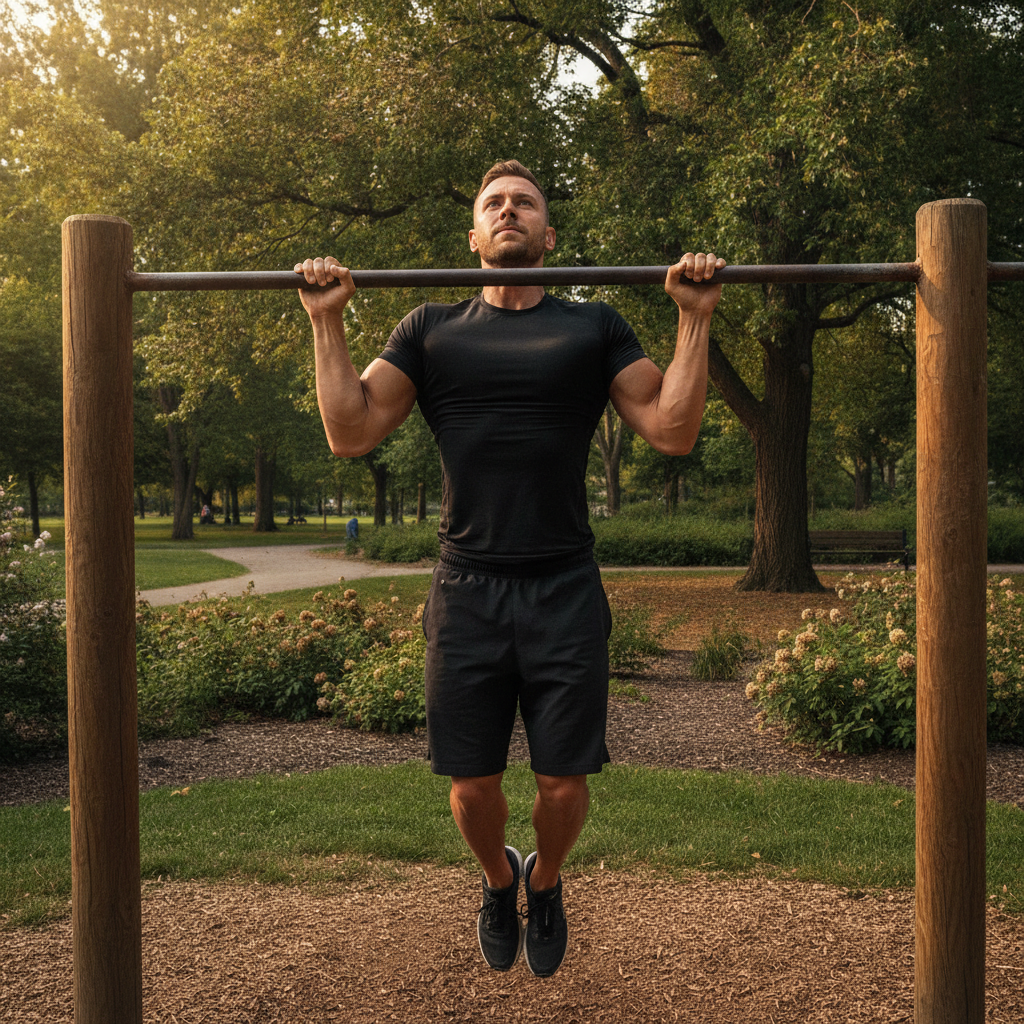
What is Calisthenics?
Calisthenics, derived from the Greek words "kalos" (beauty) and "sthenos" (strength), is a training discipline that emphasizes bodyweight movements to develop physical prowess.
It involves exercises like push-ups, pull-ups, dips, and leg raises, which target multiple muscle groups simultaneously. Unlike isolated weight training, calisthenics often engages the core and stabilizer muscles, promoting functional strength that translates to real-world activities.
This method is highly scalable, meaning exercises can be modified to suit different fitness levels, from simple variations for beginners to complex skills like muscle-ups and handstands for advanced practitioners.
Historically, calisthenics has been used by military forces and athletes for centuries due to its effectiveness in building endurance and agility. Today, it's embraced in fitness communities worldwide, often practiced in parks, gyms, or at home. The philosophy behind calisthenics is simplicity and efficiency—using minimal equipment to achieve maximum results. By mastering control over your body, you can improve not only muscle mass but also balance, coordination, and mental focus.
Key Principles of Calisthenics
At its core, calisthenics is built on principles that prioritize body awareness and progressive overload. Understanding these can help you maximize your training:
- Bodyweight Resistance: Leveraging your own weight to create resistance, which adapts as you gain strength.
- Compound Movements: Exercises that work multiple joints and muscle groups at once, such as burpees or lunges.
- Progressive Overload: Gradually increasing difficulty by adding reps, changing leverage, or advancing to harder variations.
- Skill Development: Focusing on mastering techniques like balance and control, rather than just lifting heavier weights.
Benefits of Calisthenics
Calisthenics offers a wide range of physical and mental benefits, making it a holistic approach to fitness. Here are some key advantages:
Improves Strength and Muscle Tone
By consistently challenging your muscles with bodyweight exercises, calisthenics helps build lean muscle mass and enhance strength. Exercises like push-ups target the chest, shoulders, and triceps, while squats engage the legs and glutes. Over time, this leads to improved muscle definition and functional power, without the need for bulky equipment.
Enhances Flexibility and Mobility
Many calisthenics movements require a full range of motion, which naturally increases flexibility. For example, deep squats and lunges improve hip and ankle mobility, while exercises like leg raises stretch the hamstrings. This can reduce the risk of injuries and improve overall movement efficiency in daily life.
Boosts Cardiovascular Health
Calisthenics workouts often involve high-intensity intervals or circuit training, which elevate the heart rate and improve cardiovascular endurance. Incorporating exercises like jumping jacks or mountain climbers can turn a strength session into a cardio workout, promoting heart health and calorie burn.
Increases Body Awareness and Coordination
Since calisthenics emphasizes control and balance, it enhances proprioception—your sense of body position. Skills like handstands or planks require coordination between muscles, leading to better athletic performance and reduced clumsiness.
Cost-Effective and Accessible
One of the biggest perks of calisthenics is its affordability and convenience. You don't need a gym membership or expensive gear; a pull-up bar or even just open space can suffice. This makes it ideal for people with busy schedules or limited resources, allowing for workouts at home, in parks, or while traveling—one reason bodyweight exercises are so broadly useful.
Mental Health Benefits
Exercise, including calisthenics, releases endorphins that reduce stress and improve mood. The focus required for mastering skills can also enhance mental clarity and discipline, contributing to overall well-being.
How to Start with Calisthenics
Beginning a calisthenics journey is straightforward, but it's important to start safely to avoid injury. Follow these steps to get going:
Assess Your Fitness Level
Before diving in, evaluate your current strength and flexibility. Try basic exercises like push-ups, squats, and planks to see where you stand. If you're new to exercise, consider consulting a fitness professional or using a structured calisthenics beginner guide for guidance.
Learn Fundamental Exercises
Master the basics before progressing to advanced moves. Here are some essential bodyweight exercises to start with:
- Push-ups: Target the chest, shoulders, and triceps. Start with knee push-ups if standard ones are too challenging.
- Squats: Work the legs and glutes. Focus on form by keeping your back straight and knees aligned with toes.
- Planks: Strengthen the core and improve stability. Hold for 30 seconds to start, gradually increasing time.
- Pull-ups: Build upper body strength. Use resistance bands or assisted machines if needed.
- Lunges: Enhance leg strength and balance. Alternate legs for even development.
Create a Balanced Routine
Design a workout plan that includes a mix of exercises targeting different muscle groups. Aim for 3-4 sessions per week, allowing rest days for recovery. A sample beginner routine might include:
- Warm-up: 5-10 minutes of dynamic stretches (e.g., arm circles, leg swings).
- Workout: 3 sets of 10-15 reps for each exercise (push-ups, squats, planks, lunges).
- Cool-down: 5 minutes of static stretching to improve flexibility.
Progress Gradually
As you get stronger, increase the difficulty by adding reps, reducing rest time, or trying harder variations. For example, move from knee push-ups to standard push-ups, or from assisted pull-ups to full pull-ups. Listen to your body to avoid overtraining.
Stay Consistent and Patient
Results in calisthenics, like any fitness regimen, take time. Set realistic goals, track your progress, and celebrate small victories. Consistency is key to building strength and mastering skills.
Common Calisthenics Exercises and Progressions
To help you advance, here are some popular exercises and how to progress them:
Upper Body Exercises
- Push-up Progressions: Start with wall push-ups, then knee push-ups, standard push-ups, decline push-ups, and eventually one-arm push-ups.
- Pull-up Progressions: Begin with scapular pulls, then assisted pull-ups using bands, standard pull-ups, weighted pull-ups, and muscle-ups.
Lower Body Exercises
- Squat Progressions: Try bodyweight squats, then pistol squats (single-leg squats), and jump squats for added intensity.
- Lunge Progressions: Move from forward lunges to reverse lunges, walking lunges, and jumping lunges.
Core Exercises
- Plank Progressions: Start with standard planks, then side planks, plank with leg lifts, and dynamic planks like plank jacks.
- Leg Raise Progressions: Begin with knee tucks, then hanging knee raises, straight leg raises, and toes-to-bar.
Calisthenics vs. Other Exercise Forms
Understanding how calisthenics compares to other fitness methods can help you choose what's best for you:
Calisthenics vs. Weightlifting
While weightlifting focuses on lifting external weights to build muscle mass, calisthenics uses bodyweight for functional strength. Calisthenics often improves flexibility and coordination more, while weightlifting may lead to faster muscle hypertrophy. Many people combine both for balanced fitness.
Calisthenics vs. Yoga
Yoga emphasizes flexibility, balance, and mindfulness through poses and breathing, whereas calisthenics is more strength and endurance-oriented. Both can complement each other, with yoga enhancing mobility for calisthenics movements.
Calisthenics vs. Cardio Exercises
Cardio exercises like running or cycling primarily boost cardiovascular health, while calisthenics can include cardio elements but focuses more on strength. Integrating both can provide a well-rounded fitness routine.
Tips for Success in Calisthenics
To maximize your results, keep these tips in mind:
- Focus on Form: Proper technique prevents injuries and ensures effectiveness. Watch tutorials or work with a coach if unsure.
- Incorporate Variety: Mix up exercises to target all muscle groups and prevent boredom.
- Eat a Balanced Diet: Support your training with adequate protein, carbs, and healthy fats for energy and recovery.
- Stay Hydrated: Drink water before, during, and after workouts to maintain performance.
- Listen to Your Body: Rest when needed and avoid pushing through pain to prevent overuse injuries.